Rain Garden icon - Inhabitect

Rain Gardens

Approachable. Obtainable. Resilient.

Rain gardens are a common feature in both public and private landscapes. They consist of native shrubs, perennials, and other vegetation planted in shallow depressions, typically located along a natural slope. Designed to capture and absorb stormwater runoff, rain gardens help reduce erosion and prevent downstream pollution by allowing water to soak into the ground rather than rushing off-site.

As one of the most universally accessible forms of Green Stormwater Infrastructure (GSI), rain gardens can be added to almost any landscape. They create valuable pervious surface—especially in urban environments—and are engineered to manage specific volumes of water. The result: slower stormwater flow, reduced flooding, and fewer pollutants entering municipal systems and nearby waterways.

Rain gardens are eco-friendly, support native plants and pollinators, and improve the health of surrounding ecosystems. For homeowners living near lakes, rivers, wetlands, or other bodies of water, rain gardens offer a powerful, natural solution for improving water quality and protecting your local environment.

green ribbon Inhabitect icon

'Green Ribbon' GSI Option

Rain gardens are the most accessible and affordable form of green stormwater infrastructure. They can be added to any residential project, creating a whole world of opportunity. We’re proud to give this solution our ‘Green Ribbon’ designation.

Rain Garden Benefits

Stormwater Management

Rain gardens provide some of the most accessible ways to manage stormwater. As part of the stormwater treatment train, a rain garden can be installed to dramatically slow the rate and volume of stormwater runoff.

Reduced Standing Water

Since a rain garden typically only holds water in a designated location during and immediately following a rainfall, it helps to decrease the amount of standing water on a residential or commercial site. And less standing water means reduced breeding grounds for pesky mosquitoes.

Habitat Creation

A rain garden uses native materials that are found in your surrounding area, bringing them together to consciously take advantage of their natural functions and abilities. This creates habitats for wild mammals, birds, butterflies, and insects, while also providing an added opportunity for pollination.

Improved Water Quality

A rain garden works to filter the runoff pollution that primarily comes from rooftops, streets, parking lots, and lawns. By allowing more stormwater to seep into the ground, it effectively recharges local groundwater (or in some cases the water is held until it evaporates or transpires via plant material). A rain garden is the easiest way for you to personally contribute to protecting your nearby streams and lakes, and enjoy clean water in your community.

Flooding & Drainage Protection

With a reduction in stormwater runoff volume and velocity of flow, there’s less chance of backed up stormwater and combined sewage overflow systems (CSOs). This means drains can operate the way they’re supposed to, avoiding costly floods.

Beautified Green Spaces

The addition of a rain garden enhances the aesthetics of any outdoor area. Whether they’re installed in yards, neighborhoods, parks, or in commercial settings, they add green beauty to a space.
Rain Garden

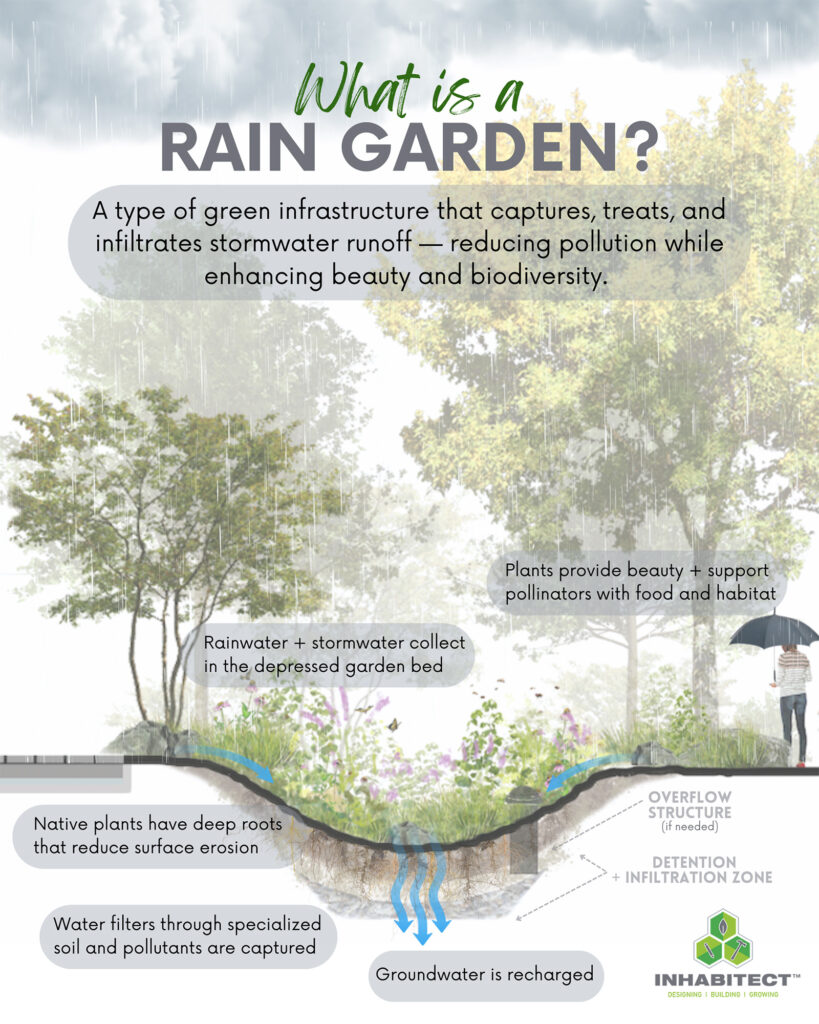
Rain gardens are a vital component of ecological landscaping, designed to manage stormwater runoff by capturing and filtering rainwater through native vegetation and engineered soil layers. Native plants play a crucial role—their deep roots, sometimes reaching over 10 feet, create pathways that improve infiltration, reduce surface runoff, and support groundwater recharge. Rain gardens not only reduce erosion and improve water quality but also enhance biodiversity by providing food and habitat for pollinators and other wildlife. Inhabitect designs each rain garden to work with the site’s natural contours, creating beautiful, functional landscapes that promote long-term environmental resilience.

rain garden graphic

Project Spotlight

Let’s Talk

Interested in Green Stormwater Infrastructure? Rain gardens are the most accessible form of GSI and can work at almost any scale — in some cases, even in DIY applications. Click to schedule a time to talk with us about your rain garden project or other questions.